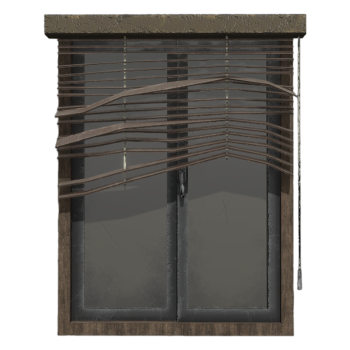
Stone Carving of the Northern Wei Vows Buddha Pagoda during the Northern Wei Dynasty in the 4th Century

Stone Carving of the Northern Wei Vows Buddha Pagoda during the Northern Wei Dynasty in the 4th Century

This Buddhist scripture pillar engraved with sacred Buddhist scriptures belongs to a group of miniature pagodas (scenic pagodas), which are only found in the Gansu Corridor in northwest China. Their age ranges from 426 AD to 36 AD, some of which bear the names of Buddhist donors who entrusted them at home. A pagoda is a circular building built to worship Buddhist relics. Miniature pagodas may be commemorating visits to holy sites or representing donations to religious groups and sites.
18th century Chinese gold-plated bronze statue of Bodhisattva

18th century Chinese gold-plated bronze statue of Bodhisattva

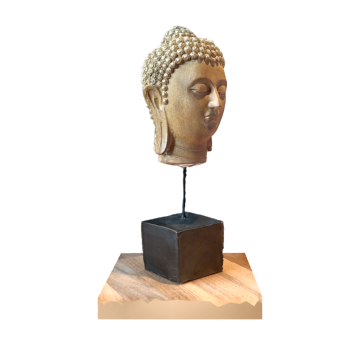
The statue of Gandhara Buddha Head from the fourth century Gandhara civilization

The statue of Gandhara Buddha Head from the fourth century Gandhara civilization

This Chinese cultural relic is a sculpture called "Gandarafo Head", which was created between 300-399 AD. This sculpture is currently housed in the National Museum of the Netherlands. The characteristics of this sculpture are the raised or bun on the head (ushnisha) and the raised point on the forehead (urna), which are standard features of Buddhism. The wavy hair combed back from the face is a characteristic of the Gandhara Buddha statue. In the early decades of the 1st century AD, the first batch of Buddha statues began to emerge. The dimensions of this sculpture are 24.0 centimeters high, 15.0 centimeters wide, and 11.8 centimeters deep.
The Louvre Museum in Paris, France, 1686 "Four Captive Sculptures"

The Louvre Museum in Paris, France, 1686 "Four Captive Sculptures"

These prisoners were taken from the pedestal of the Victory Square statue, representing the country defeated by the Treaty of Nijmegen (1679). Everyone expressed different reactions to imprisonment: resistance, hope, resignation, or sadness. They were created by Martin Desjardins, a renowned Dutch sculptor who was active during the reign of Louis XIV. Four defeated countries: symbolizing the four countries that were defeated at the time of the signing of the Treaty of Nijmegen. Each represents a different era of humanity and a different attitude towards imprisonment.
Marble lion statue

Marble lion statue

Since the Han Dynasty (206 BC to 220 AD), lion statues have traditionally stood in front of Chinese imperial palaces, royal tombs, government offices, temples, as well as the residences of government officials and wealthy people, and are considered to have a strong mythological protective effect. They are also used in other art fields, such as door knockers and pottery. Paired lion statues are still a common decorative and symbolic element at the entrances of buildings such as banks, government agencies, and police stations.
Colorful glazed statue of Wei Tuo painted in the Ming Dynasty

Colorful glazed statue of Wei Tuo painted in the Ming Dynasty

This artifact is a Bodhisattva named "Weituo", a statue from the Ming Dynasty (1368-1644) in China. This ceramic artifact is currently housed in the National Museum of Scotland. The prototype of Weituotian is Shijiantuotian, the son of Brahmanism's Great Self in Heaven. Shijiantuo has over twenty names. In addition to Shijiantuo, common ones include Kumaraj, Kajiya, Shanfan, Nengzhou, and the Six Faced Child. The common image is a two armed young male war god, and there are also six sided images.
Standing Arhat, a statue in the Song Dynasty

Standing Arhat, a statue in the Song Dynasty

This Chinese cultural relic is a sculpture named "Upright Arhat", which is a Chinese work in the 6th century AD. This sculpture is currently housed in the Minneapolis Museum of Art in the United States.
Limestone relief Buddha statues from the Shunzhi period of the Qing Dynasty in the 17th century

Limestone relief Buddha statues from the Shunzhi period of the Qing Dynasty in the 17th century

Painted ivory sculptures from the Qing Dynasty

Painted ivory sculptures from the Qing Dynasty

Qing Dynasty handmade sculpture of peacock stone horse

Qing Dynasty handmade sculpture of peacock stone horse

This cultural relic is a Chinese horse carved from peacock stone, dating back to the 19th century, and is currently housed in the British Museum.
Chinese style classical art bronze chicken statue
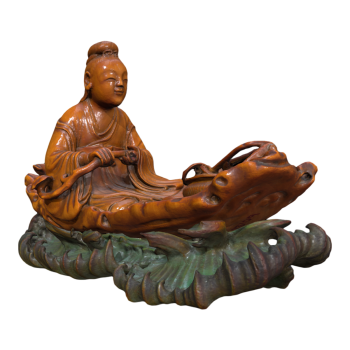
Chinese style classical art bronze chicken statue

Qing Dynasty boxwood carving "Dao Xian He Xian Gu"
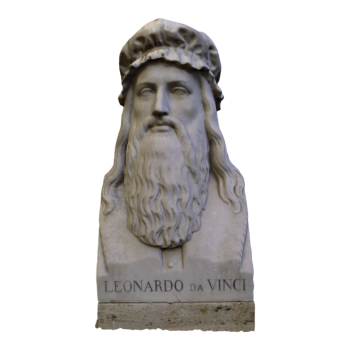
Qing Dynasty boxwood carving "Dao Xian He Xian Gu"

This is a sculpture called 'Taoist Immortal He Xiangu', made in the 1700s during the Qing Dynasty of China (1644-1911). This sculpture is made of boxwood, with a base of colored ivory and an overall height of 13.5 centimeters. He Xiangu is one of the Eight Immortals of Taoism. It is said that she was a real person during the Tang Dynasty, originally named He Qiong. In this exquisite carving, He Xiangu sits calmly on a twisted and multi jointed raft surrounded by green ivory waves. In front of her was a bamboo basket filled with items related to Taoist immortality, while she held a branch of Ganoderma lucidum.
The marble statue of Leonardo da Vinci on Mount Pinzio in Italy

The marble statue of Leonardo da Vinci on Mount Pinzio in Italy

Mount Pianzio is a mountain located in the northeast quadrant of the historical center of Rome. This mountain is located to the north of Quirinal Mountain, overlooking the Place of Matthias. It is located outside the original boundaries of ancient Roman cities and is not one of the seven mountains of Rome, but it is situated within the city walls built by Roman Emperor Aurelian between 270 and 273. Villas and Gardens In the late Roman Republic, several important families owned villas and gardens on the southern slope, including the Lucius Garden created by Lucius, the Saluste Garden created by historian Saluste, the Pompeian Garden, and the Archillion Garden. This mountain was called Garden Mountain during the Roman era.
Gypsum portrait of East German politician Wilhelm Pick

Gypsum portrait of East German politician Wilhelm Pick

William Pick was born in 1876 into a poor working-class family in Guben. Joined the German Social Democratic Party in 1895. Due to disappointment with the cooperation between the party leadership and conservative forces during World War I, he became an early member of the Spartak League and participated in the establishment of the German Communist Party. In 1933, he was forced to flee from Germany under Hitler's rule. In April 1946, the Social Democratic Party of Germany merged with the Communist Party of Germany to form the Socialist Unity Party of Germany, and was elected as one of the two chairpersons of the Socialist Unity Party along with Otto Grotiver. When the German Democratic Republic was established in 1949, he became the only president of East Germany.
The marble statue "Weeping Angel" created by William Wetmore Stoy

The marble statue "Weeping Angel" created by William Wetmore Stoy

The Weeping Angel "is a sculpture created by American sculptor William Wetmore Storey in 1894 for the grave of his wife, Emmeline Storey, in the Protestant cemetery in Rome. The full name given to it by William Wetmore Stoy is' The Sad Angel Weeps on the Demolished Altar of Life '. This is Stori's last important work before his death, one year after his wife passed away. The Metropolitan Magazine, published in 1896, documented the creation process of this statue: according to this account, the death of his wife had such a great impact on Stori that he lost interest in sculpture.
The marble statue of Lady Elche from the Iberian Peninsula in medieval Spain

The marble statue of Lady Elche from the Iberian Peninsula in medieval Spain

The Iberian sculpture is located at the National Archaeological Museum in Madrid, Spain. The museum is located on Serrano Street, adjacent to Cologne Square, and shares a building with the National Library of Spain. The museum's collection mainly comes from the Iberian Peninsula, from prehistoric times to early modern times. However, it also has different collections from outside Spain, especially from ancient Greece, whether from Greater Greece or ancient Egypt, and even a small portion from the Near East.
Statue of a Young Man in Limestone from the Classical II Period in Cyprus

Statue of a Young Man in Limestone from the Classical II Period in Cyprus

This youth portrait sculpture was made during the Cyprus Classical II period from 600-475 BC. The statue is made of limestone and was created around 530-520 BC. The hair of the sculpture is divided into large horizontal curls, forming an arched shape at the back. The details are represented by small triangles. The facial features are very delicate, with red marks on the lips. The nose is slightly curved and the eyes are wide open. The eyebrow lines are long and thin, and the ears are depicted very delicately. There is a row of curly hair above the forehead. The statue is currently on display at the Metropolitan Museum of Art in New York, located in Hall 171.
The marble statue of the ancient Greek classical period, known as the 'Giant Right Foot Statue'

The marble statue of the ancient Greek classical period, known as the 'Giant Right Foot Statue'

A huge right footed statue, once part of a statue several times its actual size. This statue is made of Parian marble. In ancient times, only the images of gods and emperors were made to such a scale. This statue is wearing a complex Greek style sandal, which first appeared in the 4th century BC. This statue is currently housed in the British Museum in London.
The bronze statue of "Bronze Moses" at Augustana University

The bronze statue of "Bronze Moses" at Augustana University

The 'Bronze Moses' at Augustana University is a full-size bronze replica of Michelangelo's' Moses' statue created by Felix de Verden. This work was donated by Fenwick, a Cleveland industrialist and former resident of Sioux Falls, in 1974. It was originally completed around 1964 and was exhibited at the Cleveland Museum in Fenwick. This statue is currently located on the campus of Augustana University.
The marble statue of Alexander the Great from the ancient Greek Empire period

The marble statue of Alexander the Great from the ancient Greek Empire period

The statue was made between the 2nd and 1st centuries BC and came from Alexandria, Egypt. The head of the statue has been cut to accommodate a separately made body. The back of the statue has been processed to receive the remaining parts of hair made from other materials. Alexander the Great was the king of the ancient Greek kingdom of Macedonia, located in present-day northern Greece and neighboring countries. Under his leadership, from 336 BC to 323 BC, Alexander the Great conquered Greek city states, the Persian Empire, and established over 70 cities, creating an empire spanning three continents and covering approximately two million square miles.
The wooden carving "Johannes Sudder" created by Gus

The wooden carving "Johannes Sudder" created by Gus

Johannes Sudel woodcarving was created by an artist named Gus, who was an art sculptor from Dresden, Germany. This wooden carved figure has long flowing hair and beard, giving it an ancient or mythical appearance. His eyes were closed, and his expression was calm and peaceful. The details of the hair and beard are handled very delicately.
The sandstone statue of the Aztec civilization, "Sitting Mithrant Kutli"

The sandstone statue of the Aztec civilization, "Sitting Mithrant Kutli"

The statue of Mithrant Kutli, the Aztec god of death, is currently housed in the British Museum in London. This statue is carved from sandstone, which has not been found in the highlands of Mexico and may have been collected and transported from the coastal areas of the Gulf in northern Mexico. The back of this statue is engraved with three pictographic characters: 'Two skulls',' Five vultures', and 'Four houses'. Mithrant Kutli is the god of death in Aztec mythology, often depicted as a figure with a skull face.
Athena's Shield in the Parthenon during the Roman Empire

Athena's Shield in the Parthenon during the Roman Empire

This is a small marble statue from the Roman period, which is the Athena shield in the Parthenon temple. This artwork is currently housed in the British Museum in London. The statue was made between 100-150 AD. This shield showcases Athena's shield, which was originally part of the Parthenon temple.
Bronze Statue Garrison - Black Jade Statue of Emperor Guan Gong
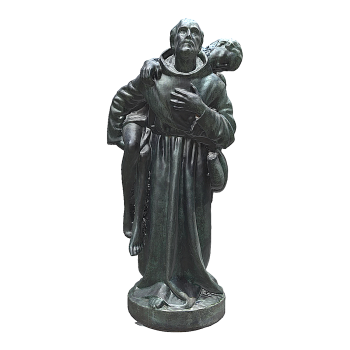
Bronze Statue Garrison - Black Jade Statue of Emperor Guan Gong

Guan Yu (160-220 AD), also known as Yunchang and Changsheng, was born in Jiexian County, Hedong Commandery (now Jiezhou Town, Yanhu District, Yuncheng City, Shanxi Province). A famous general in the late Eastern Han Dynasty. Guan Yu treated soldiers well and despised literati, and was known for his loyalty and righteousness in later generations. After his death, he was revered as "Guan Gong" by the people and was often honored by the imperial courts throughout history. During the reign of Emperor Yongzheng of the Qing Dynasty, he was revered as the "Martial Saint" and held the same status as Confucius, the "Literary Saint". In the novel 'Romance of the Three Kingdoms', he is ranked first among the' Five Tiger Generals'. In the regions of Hong Kong, Macau, Taiwan, and some Southeast Asian countries, almost every household worships the statue of Guan Gong, who is worshipped by Confucius in literature and Guan Gong in martial arts.